
For the joint pain
that won’t quit.
A non-surgical option for active professionals who’ve already tried PT, cortisone, and rest.
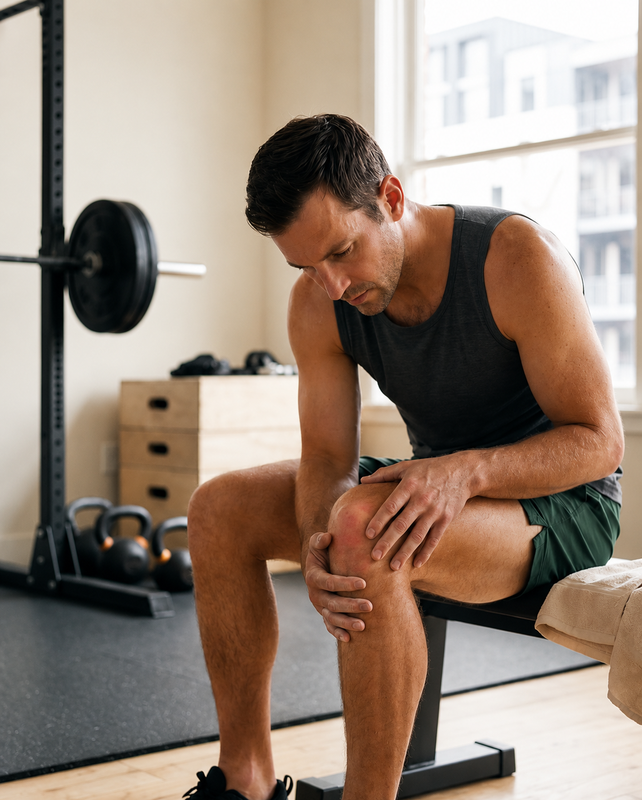
Your own platelets, sent straight to the source.
We draw a small sample of your blood, concentrate the platelets, and inject them into the affected joint or tendon under ultrasound guidance — exactly where the tissue needs the signal.
Because it’s your own biology, PRP is often the option active patients choose when they want to keep moving without committing to surgery.
PRP is commonly considered for
- Tendon injuries
- Mild-to-moderate arthritis
- Ligament strains
- Overuse injuries
- Persistent joint pain
- Post-injury rehabilitation
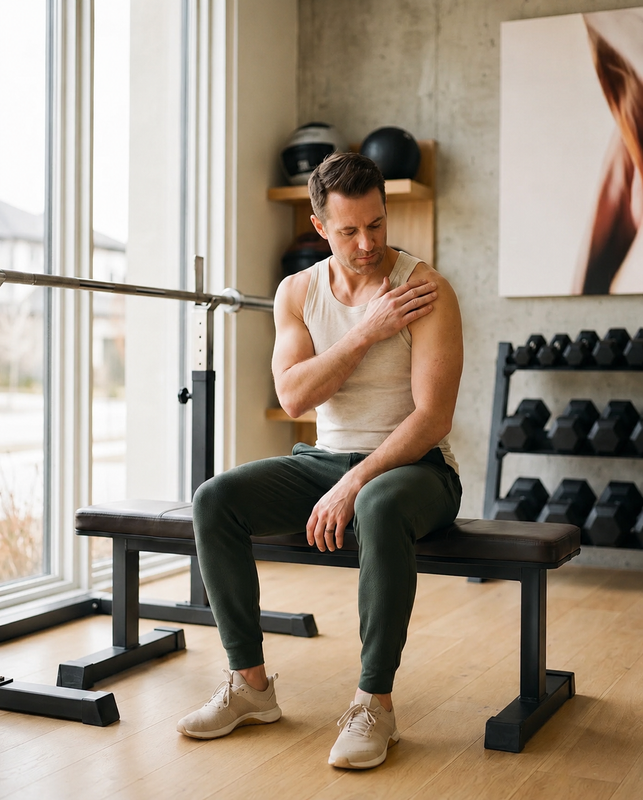
Joint conditions, by region.
The conditions PRP addresses most reliably for active professionals. The kind of nagging issues that have built up over years of training and aren’t responding to standard rehab.
- Knee pain (patellar tendinitis, mild-to-moderate OA)
- Shoulder pain (rotator cuff, biceps tendinopathy)
- Hip pain (gluteal tendinopathy, labral irritation)
- Elbow pain (lateral & medial epicondylitis)
- Persistent joint pain post-PT
- Joint pain unresponsive to cortisone
- Mild-to-moderate osteoarthritis
- Chronic ligament strains
- Overuse and repetitive-stress injuries
Three steps to know if PRP is right for you.
Submit your information.
Takes about 60 seconds. Tell us what hurts, how long it's been going on, and what you've already tried.
Have a 10-minute qualifying call.
We tell you whether PRP makes sense for your case. And if it doesn't, we'll point you toward what does.
Meet with Dr. Kaplan.
A focused orthopedic evaluation, a clear recommendation, and a treatment plan built around your schedule.
What patients say.
"I’d been training around my injury for a year. PRP finally got me past it."— Patient testimonial, NYC
"I’d tried PT. I’d tried rest. PRP was what got me back to training."— Patient testimonial, NYC
"My surgeon recommended surgery. I tried PRP first. I’m so glad I did."— Patient testimonial, NYC
"I’d been on the cortisone cycle for a year. PRP felt like a different conversation."— Patient testimonial, NYC
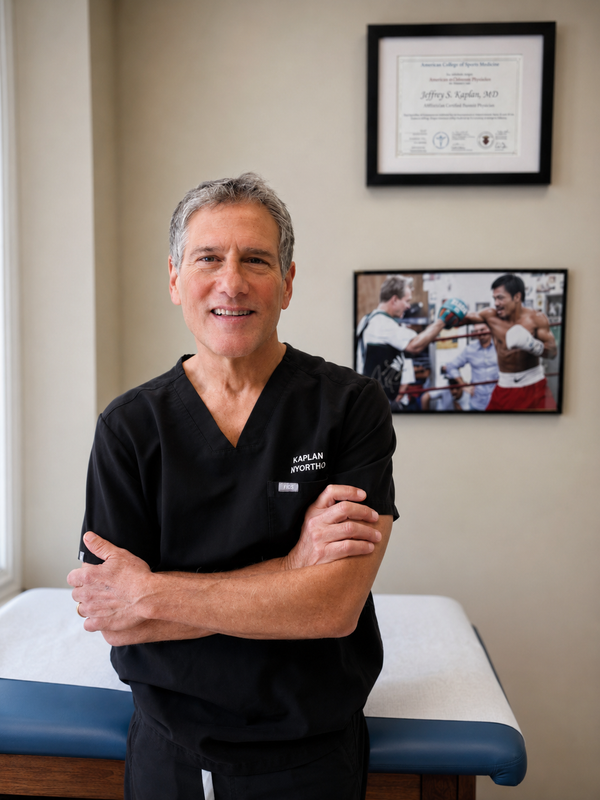
An orthopedic surgeon who isn’t trying to sell you surgery.
Dr. Jeffrey Kaplan is a board-certified orthopedic surgeon in NYC, specializing in sports medicine and joint care for active adults.
He was educated at Yale University and Columbia University College of Physicians and Surgeons, and is board-certified by the American Board of Orthopedic Surgery with over 30 years of experience. Surgery remains an option when it's the right call — but the practice is built to help patients avoid it when they can.
Common questions.
How do I know if I’m a good candidate for PRP?
Most patients we treat have tendinopathies, mild-to-moderate joint OA, ligament strains, or chronic overuse injuries. PRP works less reliably for severe bone-on-bone arthritis or complete ligament tears. The qualifying call sorts this out in about 10 minutes.
What makes PRP different from cortisone or surgery?
Cortisone manages inflammation but doesn’t address the underlying tissue, and the relief tends to wear off faster each time. Surgery is a six-month commitment with permanent structural changes. PRP sits between them, using your body’s own growth factors to signal repair, without the recovery cost of an operation.
How many treatments are typically needed?
Most patients need one injection per affected area, with results lasting 3+ months. Some chronic conditions benefit from a 2–3 injection series spaced 4–6 weeks apart. Dr. Kaplan will tell you what your case actually requires.
What happens if PRP isn’t right for me?
We’ll tell you. The qualifying call is meant to filter; the consult is meant to plan. If you’re not a good candidate, we’ll say so, and where appropriate, point you toward what is.
Why not just wait and see if it improves?
Sometimes that’s the right call, and we’ll say so. For chronic tendinopathies and overuse injuries that haven’t resolved with rest and PT, waiting often makes outcomes worse, not better.
This is what the months after often look like.
You walk into the gym without thinking about your shoulder. You add weight to the bar. You skip the modifications. You stop calculating whether your knee can handle the run.
The pain isn't your daily companion anymore. The hesitation before every workout fades. You stop training around the injury and start training again.
For the right candidate, this is the kind of outcome PRP can support. PRP isn't right for every case, and we'll tell you straight when it isn't.
Get to the source of the joint pain.
Book an orthopedic consultation with Dr. Kaplan. We'll evaluate your case, discuss the treatment options — including PRP if it fits — and give you a clear path forward.
Consultations covered by insurance.
Get a Consult Now